
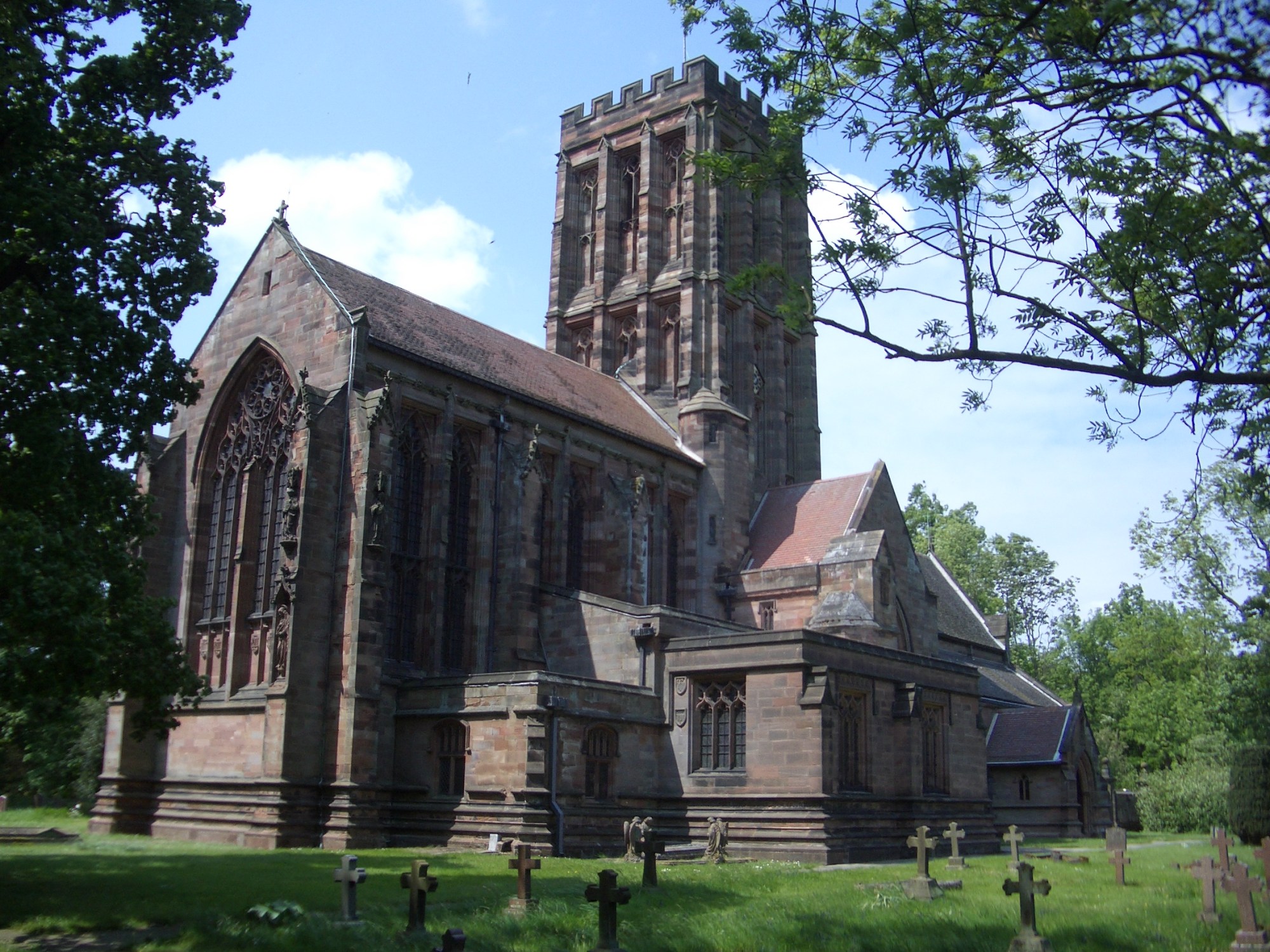
George Frederick Bodley (1827-1907) was a British architect whose career spanned the Victorian era. His work was characterised by an eclectic and highly individual style, combining elements from the Gothic Revival, Arts and Crafts. He is best known for his Gothic Revival style of architecture of grand houses and churches.
George Frederick Bodley was born in Hull, East Riding of Yorkshire, England, on 14 March 1827. He was apprenticed to the Gothic Revival architect Sir George Gilbert Scott and worked with him from 1845 until at least 1852, when he established his own practice.
Bodley’s most famous work is his house in Marylebone, which he designed and built in the late 19th century. The stunning building is often cited as an example of the finest Gothic Revival architecture in all of London. The government has designated the house as a Grade II historic structure.
The house features several architectural features characteristic of the Gothic Revival style, such as elaborate tracery, buttresses, and finials. The interior is decorated with a mix of painted and carved woodwork, impressive stained-glass windows and marble fireplaces.
Bodley was also involved in restoring several churches and cathedrals, including St Mary’s Church in Nottingham. He also worked on a number of private homes and public buildings.
Bodley’s career ended in 1902, and he died five years later. The legacy of George Frederick Bodley lives on in the many iconic buildings he designed and the medieval churches he restored and redecorated. The house in Marylebone is a splendid example of Bodley’s eclectic approach to architecture and a testament to his skill and craftsmanship. Bodley’s work is an integral part of the history of English architecture, and his contribution to the Gothic Revival will be remembered for many years to come.
By Unknown author – http://www.stdavidscathedralhobart.org/history/, Public Domain, https://commons.wikimedia.org/w/index.php?curid=14959329
 Recepies from the World